







At the back of the VLC everyday, a group of students enhance their skills on editing, video, and talking. The class itself is often looked over, but contains the foundation for a future career in the broadcast world.
Broadcasting is an almost all day class that specializes in captures news, sports, and entertainment of Mooresville High School. Taught by Professor Andrew Marine, students focus on building a cornerstone for their future.
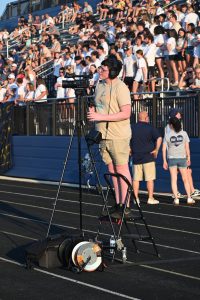
In this class, students have the opportunity to be around multiple roles including graphics operator, sound operator, camera operator, technical director, and director. Student broadcasting handles all of the technical aspects of what a live broadcast may have by utilizing all of these roles. Students go to dozens upon dozens of events during the school year building these qualities up for the future.
The class itself can be difficult to understand in a vast picture, so let’s break it down. Like any CTE class at Mooresville, the class starts with Principles of Broadcasting. In this class you will develop the basic skills for video and audio by using software that you wouldn’t normally use in other classes. The next class can be AV Production, where first semester is audio centric. Students will enhance their audio skills through different projects. Second semester is more focused on video, once again building up skills through different projects. These two classes are offered through Vincennes University. Mass Media is the third year. This class brings MHS Fast Break, the news source during 5th period that specializes in informing the school about certain activities going on in the school. These are streamed on Pioneer TV.
All other streams over sports can be found on Pioneer TV as well. Mass Media also do more specialized projects than the previous two years. If a student is interested in completing the capstone, there is a course offered through Vincennes that is called Broadcast 206. Professor Marine describes these classes as a way to tell stories in different ways.
“We’re story tellers. Live versus scripted. This pathway trains you to navigate both sides. There is space for teamwork, comradery, and individual performance. You’ll never think of social media the same again,” Marine said.
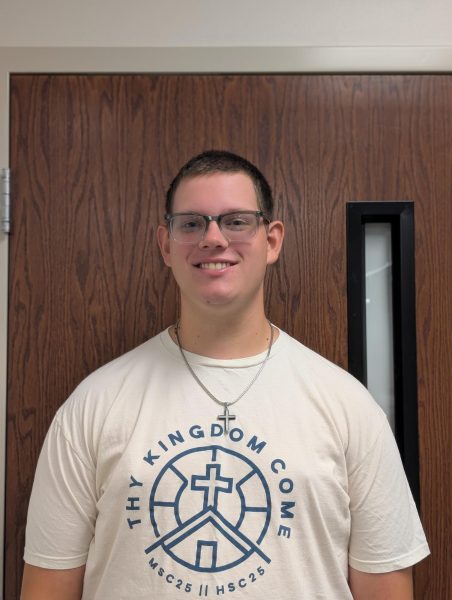
Students love the classes, but sophomore Breelyn Bower has noticed that the class is more than learning.
“I would definitely promote it, but not for the way you think. The community is a special thing. The events really bring people together, but the class itself isn’t really the main point of broadcasting, its how you go out and use it in your everyday life,” Bower said.
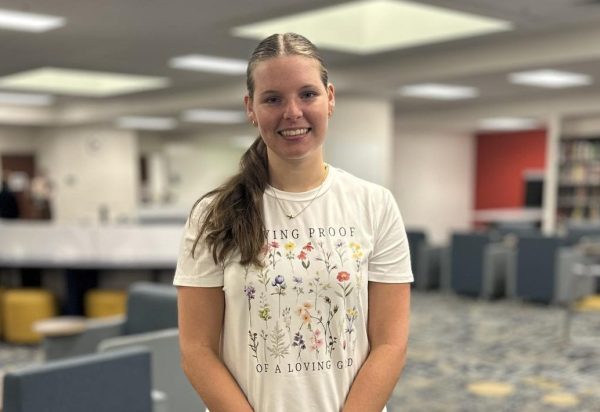
Broadcasting senior Haley Patterson agrees with Bower, and says to take a leap of faith if you’re not sure about joining the class by talking with the people in the class to see what the environment is in broadcasting
“If you’re on the fence, talk to people in broadcasting. I was on the fence about it, but it was easy to make friends in broadcasting,” Patterson said.
Broadcasting is a special class. While it is a normal class, its more than that. It builds up skills that are extremely necessary for a career in broadcasting. If someone is interested in any type of video or sound editing, then it would be highly recommended to take the principles class. And if they’re on the fence, just take a chance. It may be a future career choice.